

How To Build A Popsicle Stick Catapult: A Kids STEM Activity
Who else is up for a fun fall STEM challenge? Let’s make a popsicle stick catapult! Kids will have a blast launching acorns across the room with something they built themselves.
It only takes about 10 minutes to put together, uses supplies you can grab at the dollar store, and sends acorns flying across the room. How fun is that?
I love activities like this because kids are just having a blast seeing how far they can send that little acorn flying. They don’t even realize they’re learning at the same time.
This is perfect for a rainy fall afternoon, a family STEM night, or just a random Tuesday when everyone needs something fun to do. Kids around age 6 and up can build it themselves with just a little help, and younger kids will love being the official acorn launchers.
So grab your popsicle sticks and let’s get building!
This post is part of my Seasonal Activities collection. You can find all my Holiday & Seasonal Activities here, or head to the Kids Activities resource hub for hundreds of fun ideas in one place.
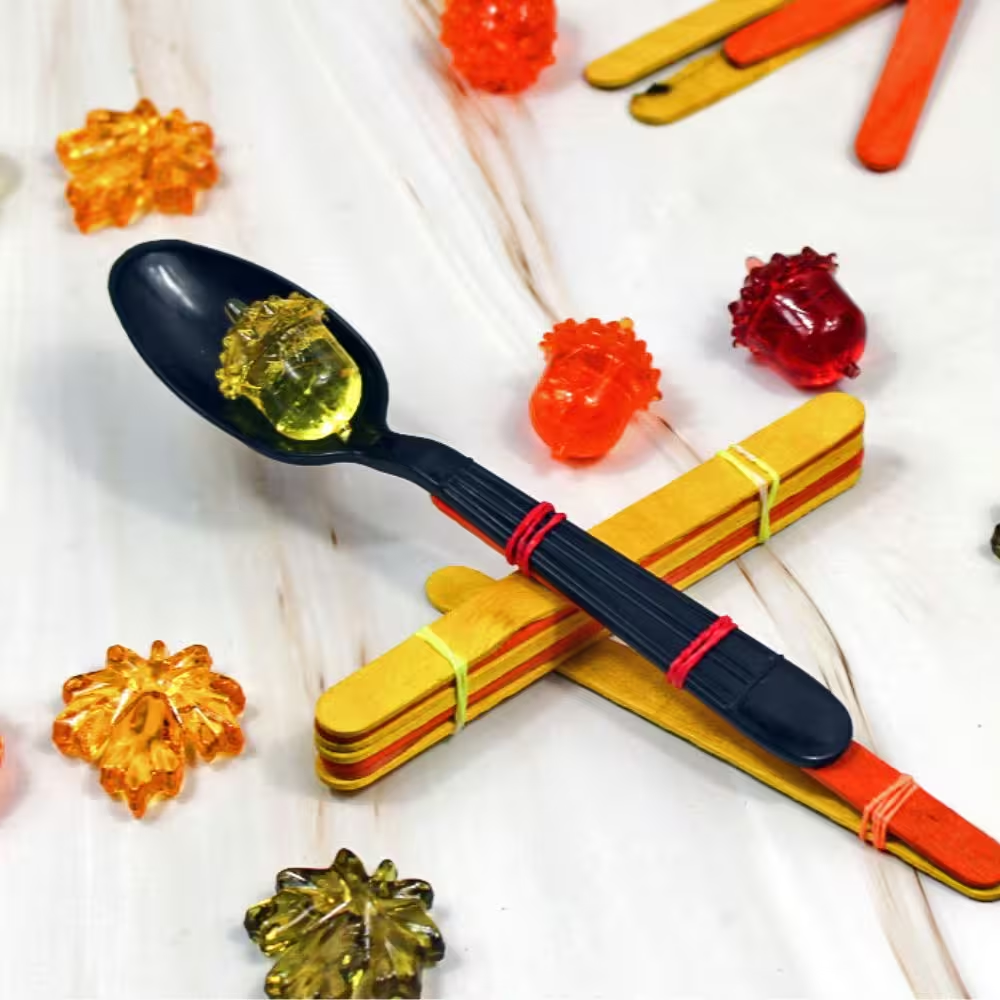
What You Need

Good news: this is a super short list of supplies. You probably have most of it at home already, and anything you’re missing can be picked up at the dollar store.
- 9 popsicle sticks
- 5 small rubber bands
- 1 plastic spoon
- Plastic acorns
That’s it! No glue gun, no fancy materials, no special tools needed. Just a few simple supplies and you’re ready to go.
How to Build a Popsicle Stick Catapult
Building a popsicle stick Catapult is easier than it looks! Kids ages 6 and up can do most of it on their own. Younger kids might need a little help with the rubber bands, but they’ll pick it up in no time.
Let’s get started!
Step 1: Gather your supplies
Lay everything out before you start. It makes the whole process smoother, and honestly, it’s a great habit for kids to get into. Real engineers always check their supplies before they start building!
Step 2: Attach the spoon
Place the plastic spoon on top of one popsicle stick, with the bowl facing up. Use two rubber bands to secure them together. Make sure those rubber bands are nice and tight—a loose spoon won’t launch anything very far!
Step 3: Add the second stick
Slide a second popsicle stick underneath the stick and spoon. Secure it with another rubber band at one end as shown. You now have a little sandwich — stick, spoon, stick.
Step 4: Stack the remaining sticks
Take your remaining 7 popsicle sticks and stack them in a neat pile. Secure the stack with a rubber band at each end. This stack is your fulcrum (the pivoting point), so make sure it’s held tightly together.
Step 5: Assemble the catapult
Now comes the fun part! Slide the stack of popsicle sticks between the two sticks from Step 3, positioning it closer to the end opposite the spoon.
Step 6: Load and launch!
Place an acorn or a fall leaf in the bowl of the spoon. Push the spoon down toward the base, then let go. Watch that acorn soar!
Tips for Building Your Popsicle Stick Catapult
A little troubleshooting goes a long way here. Here are a few tips to help you get the best launches right from the start.
Wrap those rubber bands tight.
This is the most important tip! Loose rubber bands mean a floppy catapult and sad, short launches. Take an extra minute to make sure everything is snug before you start launching.
Position the stack carefully.
The closer the stack of sticks is to the end opposite the spoon, the more tension you’ll get. If your launches feel a little weak, try sliding the stack further toward that end and see what happens.
Give yourself some space.
Seriously. Clear a little room before you start launching. A good shot can travel further than you’d expect, and you don’t want acorns bouncing off the television.
Make It an Experiment
Once your catapult is built and everyone’s had a few turns, it’s time to kick things up a notch. This is where the real STEM magic happens.
Try some of these challenges and see what you discover.
Which flies farther: an acorn or a pom pom?
Try launching different objects and see how weight affects distance. A pom pom, a small button, a dried bean, or a real acorn are all fair game. Anything small and lightweight will do the trick.
Before you test it, ask your kids to make a prediction. Which one do they think will travel farther, and why? Then launch each one a few times and measure the distance. Were they right?
Does changing the height of the stack make a difference?
Try changing the height of your stack by removing or adding sticks. What happens to your launches?
Does pulling the spoon back farther make a difference?
Try a gentle launch, then a full pull-back. Measure both and compare. This is a great way to see potential and kinetic energy in action. More pull means more stored energy, which means more distance.
Can you hit a target?
Set up a small container or draw a circle on the floor with tape. How many launches does it take to land an acorn inside? Fair warning: this one gets competitive fast!
The key to making this feel like a real experiment is to measure and compare. Grab a tape measure or a ruler and jot down your results. You might be surprised by what you find!
The Science Behind the Popsicle Stick Catapult
Don’t worry—this is the fun kind of science. No textbooks needed.
Potential Energy
When you push the spoon down and hold it, you’re adding energy to the elastic bands in the catapult. That’s called potential energy. It’s energy that’s ready to go but hasn’t moved yet.
Kinetic Energy
The second you let go of the spoon, all that stored energy turns into movement. Most of it goes into the acorn, which flies through the air. The energy of motion is called kinetic energy.
Potential energy and kinetic energy are always working together. One stores it, one releases it. Your catapult switches between them every single time you launch.
Here’s a video that demonstrates how to build the popsicle stick catapult and explains potential and kinetic energy. The instructions are slightly different, but you end up with the same catapult.
Projectile Motion
Here’s something fun to watch for: once the acorn leaves the spoon, it doesn’t travel in a straight line. It arcs up, then curves back down. That curved path is called projectile motion, and it happens because gravity is always pulling the acorn toward the ground.
Ask your kids to watch the arc next time they launch. Can they spot the curve?
More Fall Fun For Your Family
If your kids loved this catapult, chances are they’re in the mood for more fall fun. Here are a few more ideas to keep the good times rolling.
There’s something really satisfying about watching your kids build something with their own hands and then seeing it actually work. This popsicle stick catapult delivers that every single time.
It’s simple enough that kids feel confident building it, and exciting enough that they’ll want to do it again and again. And somewhere in between all those acorn launches, they’re leaerning concepts that will stick with them long after the rubber bands wear out.
Now go clear some space in the living room and give this catapult a try. Those acorns aren’t going to launch themselves!
Fall STEM Popsicle Stick Catapult
Equipment
- 9 popsicle sticks
- small rubberbands
- Plastic spoon Plastic acorns
Instructions
- Place the plastic spoon onto one of the popsicle sticks, and secure it with two rubberbands.
- Add another popsicle stick under the spoon. Secure it with another rubber band at the bottom end.
- Stack the remaining popsicle sticks, then secure them with two rubberbands, one on each end.
- Slip the stack of popsicle sticks between the popsicle stick attached to the spoon and the one underneath that.
- Add an acorn to the spoon and draw the spoon down, then launch!
